
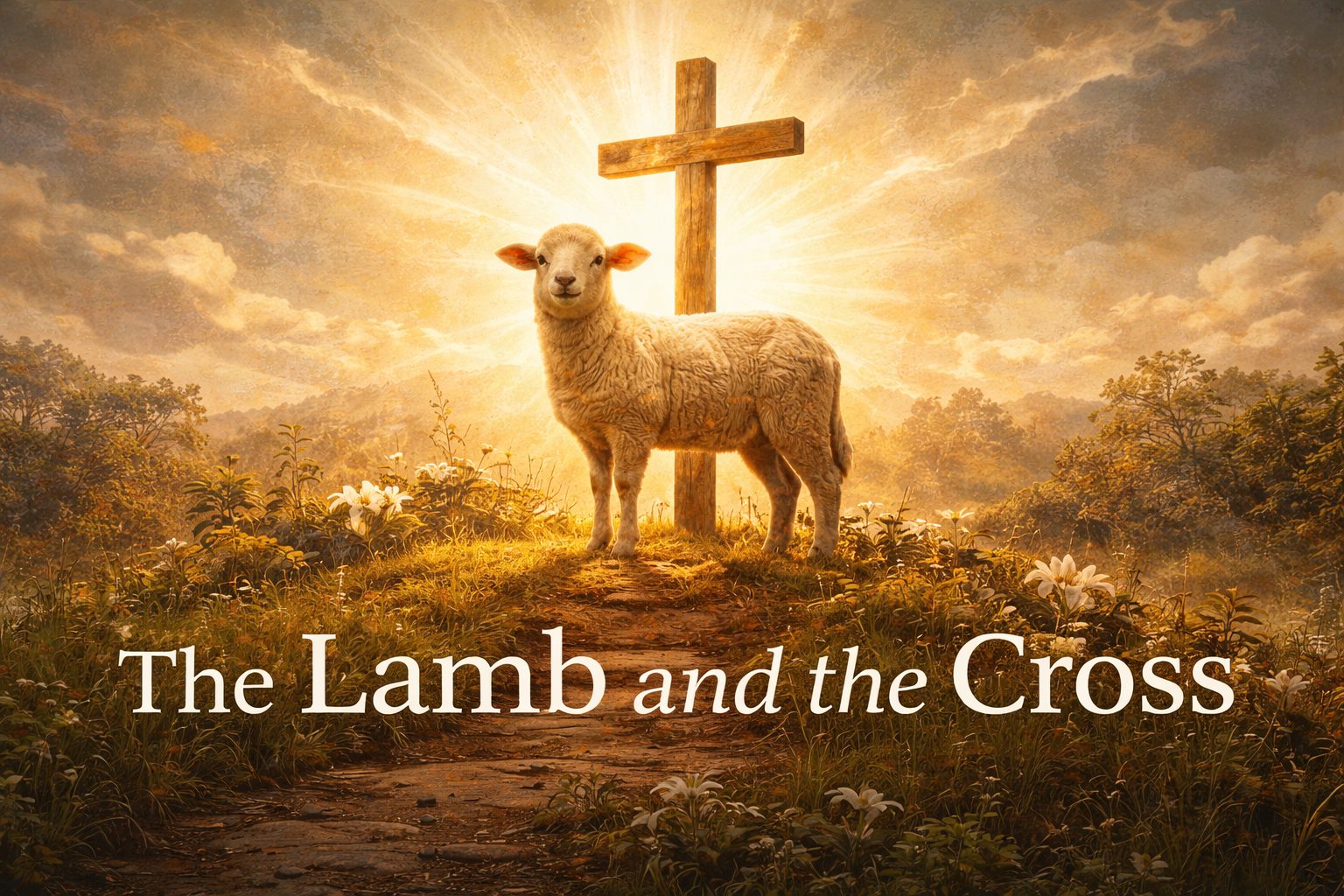
What the cross reveals about God
The cross stands at the center of the Christian story.
For centuries, many people have understood the cross primarily as a transaction of divine punishment. According to this idea, God required violence in order to forgive humanity.
But when we look carefully at the life and teaching of Jesus, a very different picture emerges.
Jesus repeatedly taught his followers to love their enemies, forgive those who harm them, and refuse retaliation. He even claimed that his life revealed the very character of God.
“Anyone who has seen me has seen the Father.”
— John 14:9
If Jesus reveals the nature of God, then the cross must be understood through the life and teaching of Jesus.
And what we see at the cross is not God demanding violence.
We see God absorbing human violence and responding with forgiveness.
The Lamb of God
From the beginning of the Gospel story, Jesus is described with a powerful image.
John the Baptist introduces him with these words:
“Behold, the Lamb of God, who takes away the sin of the world.”
— John 1:29
The Lamb is not a symbol of domination or military power. It is a symbol of innocence, humility, and sacrificial love.
Jesus does not conquer through force.
He conquers through self-giving love.
This pattern appears again at the end of the biblical story in the book of Revelation.
There we see a remarkable vision.
The one who reigns over all creation is not described as a warrior king.
He is described as a Lamb who was slain.
“Then I saw a Lamb, looking as if it had been slain, standing at the center of the throne.”
— Revelation 5:6
The Lamb reigns not through violence, but through sacrifice.
The Cross Exposes Human Violence
The cross also reveals something about humanity.
When Jesus arrived proclaiming the Kingdom of God and teaching the Way of love, the systems of power around him reacted with fear and hostility.
Religious leaders condemned him.
Political authorities executed him.
Crowds mocked him.
The cross exposes the tragic pattern that has repeated throughout human history.
When confronted with truth, love, and mercy, human societies often respond with violence.
The cross reveals this reality with painful clarity.
It shows what happens when perfect love enters a violent world.
Forgiveness in the Face of Violence
Yet even in the moment of execution, Jesus does something extraordinary.
As he hangs on the cross, he speaks words that echo the very heart of his teaching.
“Father, forgive them, for they do not know what they are doing.”
— Luke 23:34
Even while being killed, Jesus practices enemy-love.
He does not curse his executioners.
He forgives them.
This moment reveals the true power of the cross.
The violence of the world meets the love of God.
And instead of responding with revenge, God responds with mercy.
Love Stronger Than Violence
The cross therefore reveals two things at the same time.
It exposes the violence of the world.
And it reveals the nonviolent love of God.
God does not defeat evil by becoming more violent than the world.
God defeats evil through self-giving love that refuses to return violence for violence.
This is why the resurrection is so important.
The resurrection declares that the way of sacrificial love is stronger than death itself.
The Lamb who was slain now reigns.
The Invitation of the Cross
The cross is not only something we believe about.
It is something we are invited to follow.
Jesus once said:
“Whoever wants to be my disciple must deny themselves and take up their cross and follow me.”
— Matthew 16:24
To take up the cross means choosing the same path that Jesus walked.
It means refusing hatred.
Refusing retaliation.
Refusing the cycle of violence that has shaped so much of human history.
Instead, followers of Jesus are called to live according to the same love that was revealed on the cross.
A love that forgives enemies.
A love that seeks peace.
A love that overcomes evil with good.
The Lamb Who Reigns
The final vision of the New Testament does not show a violent conqueror ruling the world.
It shows a Lamb.
A Lamb who was slain.
And yet that Lamb stands at the center of the throne of God.
This is the great paradox of the gospel.
The one who conquers the world is the one who gives his life for it.
The Kingdom of God does not advance through domination or violence.
It advances through the transforming power of love.
The Journey Continues
The message of Jesus begins with the announcement of the Kingdom.
It continues with the invitation to follow the Way.
And it is revealed most clearly in the self-giving love of the Lamb.
Together these truths form the foundation of the life Jesus calls us to live.